Assassin de la police

99% Invisible’s latest episode recounts the almost vain attempt at tracking down the origins of the popular song “Who let the dogs out”, which, mild spoiler ahead, turns out to have roots all the way back to the mid 1980’s. It ends up being a quirky exploration the artistic creation process, ranging from inspiration and remixes to the straight up appropriation of someone else’s work.

Molly and I live by the Panhandle in San Francisco. The neighborhood has its perks but I wouldn’t qualify it as lively. A couple of nights ago though, as we were ready to turn the lights off, we heard a song coming from the street that immediately set off memories straight from my teenage years back in France: it was the soundtrack of the movie La Haine.

The movie takes place in the 1990’s, in the distant suburbs of Paris, where cheaply-built high-rises host 2nd and 3rd generation immigrants, working class folks that were sent to live there three decades prior. This is a pattern that was and remains common in the surroundings of most large French cities: the geographic isolation and the progressive disinvestment of state and local governments led to segregation, mass unemployment, crime and an immense buildup of resentment. The movie tells the story of a moment in time where this frustration explodes into rioting. Early on, the following scene comes up:

To any French viewer at the time (and to me until 48 hours ago) the song being remixed here distinctly says:

Assassin de la police / Nique la police

Which in English translates to:

Assassin of the police / Fuck the police

The first half of that is a neat, if peculiar, turn of phrase that clearly conveys the anti-cop feelings of the youth living in the community where the movie takes place.

This is a song I would never have expected to hear in the streets of SF. But when I told the story to Molly, she countered that the song is actually not in French, but in plain English. It didn’t take long for us to track it down and settle it once and for all:

It’s the same song, but it’s also not the same song. For an entire generation of French people, the song is without a doubt recorded in French by a French speaker. Which is factually not the case at all. How you hear it will depend on which side of the ocean you’re from. “Assassin de la police” was really “That’s the sound of da police” all along. I was stunned—this was the kind of small moments of clarity that makes me question what else I might have been wrong about for the last decades.

Further digging turned up articles on French news outlets debunking the mass auditive hallucination French people have fallen victims to since 25 years ago. Conversely, we also found forums where English speakers are thoroughly confused at the insistence from French speakers that the song does not say what it says. It’s an interesting take on the history of a popular tune: a song can just be forked from the mainline and take on a parallel path, without the least involvement or control from its creator.

What’s interesting to me here is how the split is rooted in language. There was hardly any altering or editing, just a juxtaposition of lyrics which created the illusion of a new song in a different tongue. The DJ in that scene took an existing work of art and simply oriented it towards a completely different audience that he knew would be fooled by it. There’s genius here and I’m a little sad that I’ve only come to realize here so long after it came out.
Horizon Zero Dawn

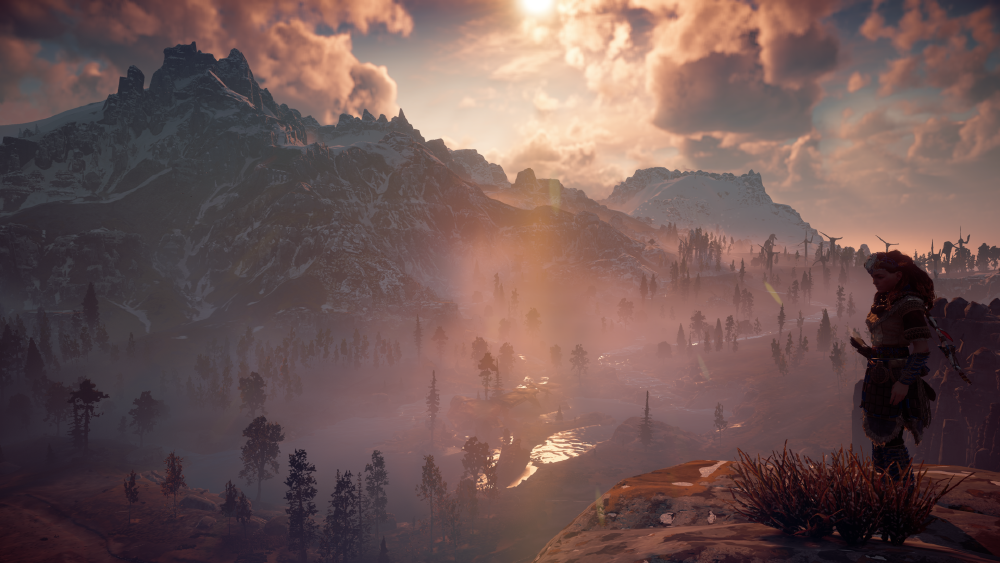
Mountains and broken windmills by Dawn's Sentinel

I’m not a gamer in what has become the traditional sense of the term — I actually stopped playing games right as the rise of PC gaming in the late 90’s made the games more complex, and also brought a crowd that seemed both more competitive and aggravated by the availability of online gaming. The games I’ve liked playing were always simple, arcade-like single player ones: racing, fighting and the such. I’ve never felt quite like the commitment to finish an adventure game. Since I’ve bought a PS4 a couple of years ago, most of its time was spent playing Rocket League. Over time, I purchased a handful of other games but they’ve been sitting in a small pile next to my desk. That changed a couple of months ago where I reached the tail-end of a stressful 12 months and felt I needed something a bit involved to take my mind off things.

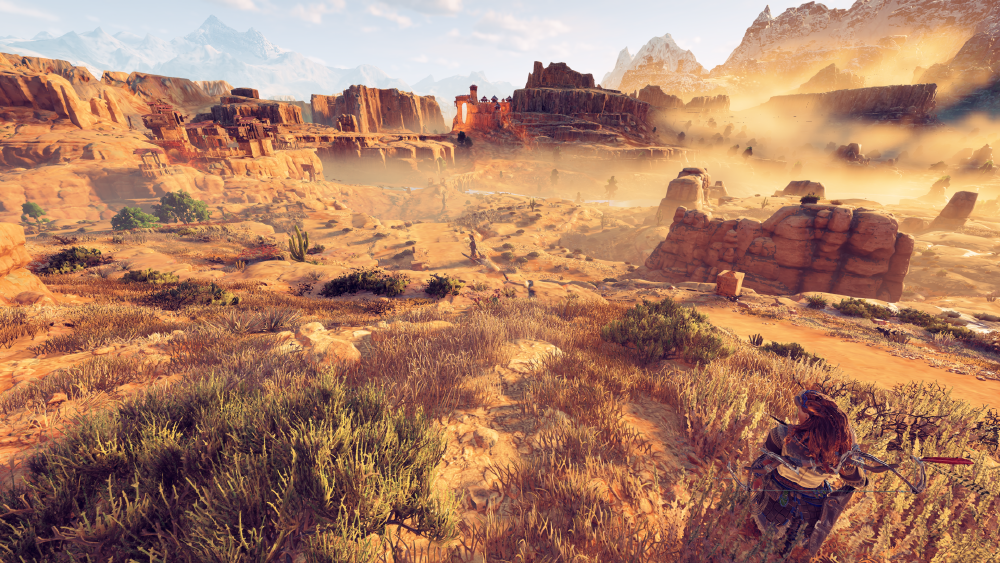
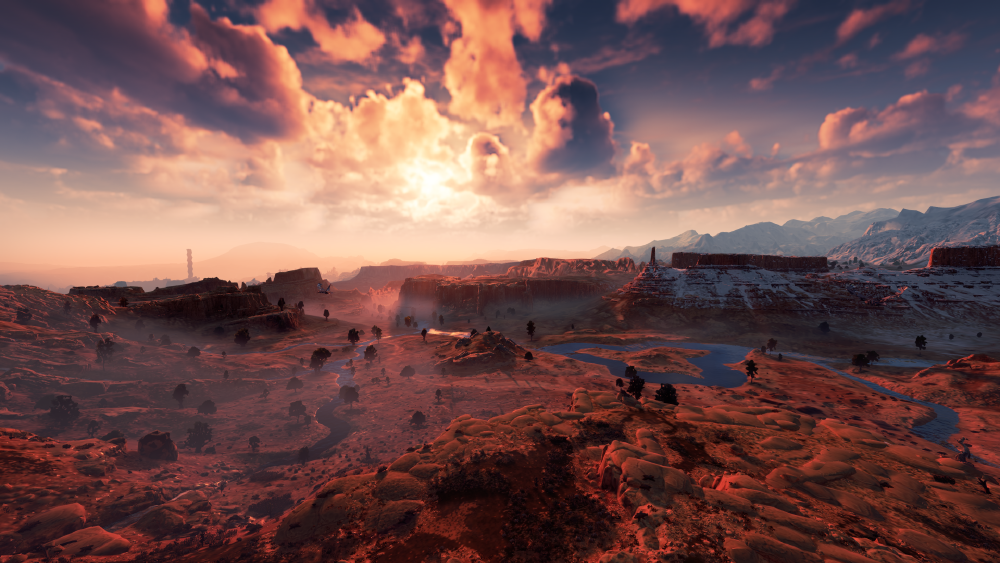
Sandstone buttes in the Cooper Deeps

What a delightful surprise this game was. I don’t like going in superlatives but this is simply the best game I’ve ever played, in most possible way: graphics, animation, acting, storyline. The game takes place in an earth-like world inhabited by human tribes and animal-like machines. It begins as a small girl named Aloy, who lives with a foster father as outcasts from the Nora tribe, falls into a metal cave and finds a Focus — a small clip-on AR device that can reveal the secrets of her surroundings. Years later, Aloy finds herself in a situation where she needs to step up and regain her status in the tribe, confront the machines, unveil a conspiracy and ultimately figure out why she and no one else can play that role.

The vastness of the desert

As with all good stories, Horizon Zero Dawn blends the discovery of the self with the discovery of the greater world: who built the machines? Why are they hostile? Why is Aloy the target of an assassination attempt? What secrets will be revealed by unlocking the monumental gates at the heart of the Nora caves?

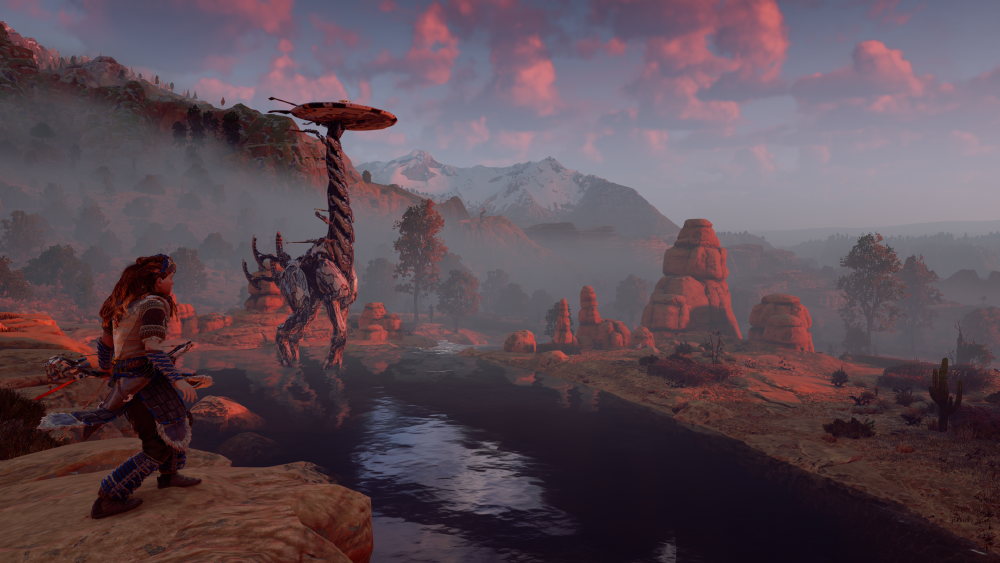
Towering Tallneck

The execution really shines here: Horizon Zero Dawn is a true masterpiece – the explorable world is immense yet polished and provides plenty of opportunity to gaze, the game mechanics alternate well between discovery and action, the main quest is meaty and the progress you make feels steady throughout. I struggled without feeling stuck and only ended up lowering the difficulty for the ultimate boss fight. Fandom also runs an extensive wiki that helps with certain tricky situations.

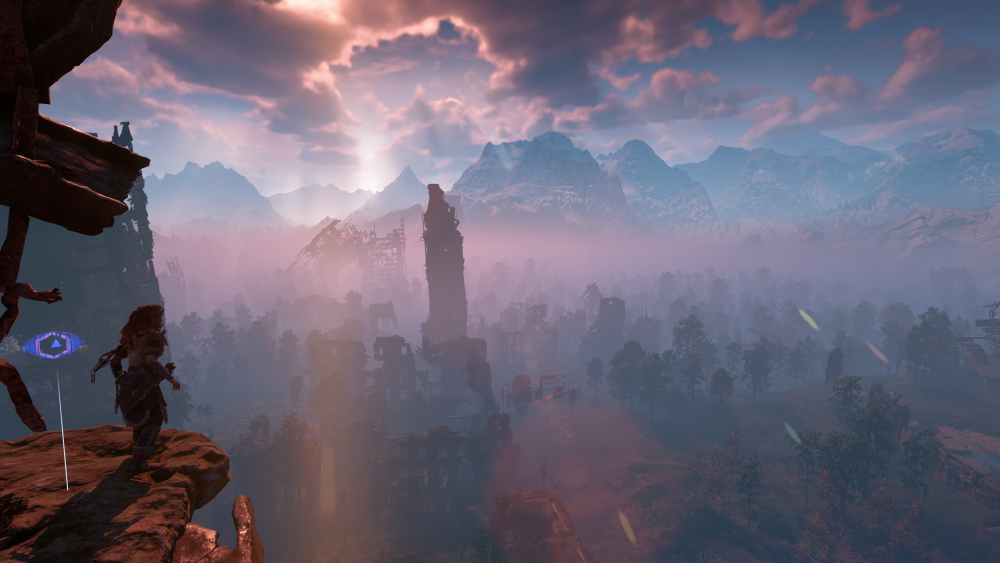
Ruins of Devil's Thirst

The landscape are directly inspired from the American Southwest are elevated by the atmospherics, the transition between night and day, the vegetation. There never is a loading screen, as the game make clever use of dust and clouds to hide the clipping that must take place behind the scene. The game is just beautiful – it was the first time I played a game that offered a photo mode and I enjoyed it a lot. On top of that, the voice acting and the soundtrack are top-notch. This game sat on a shelf for way too long, the anticipated release of HZD2 on the PS5 will be an instant buy for me. Enough words, more pictures below:

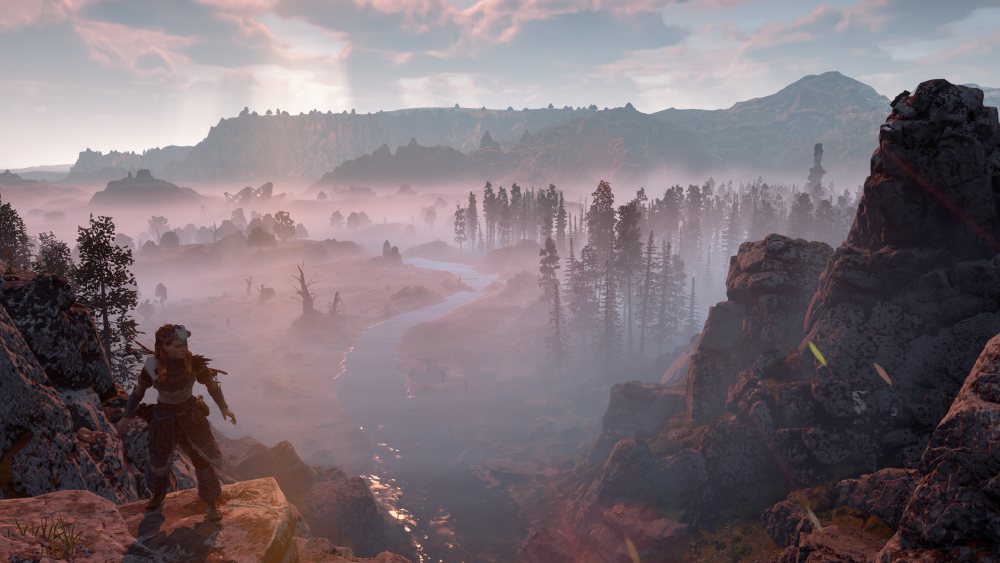
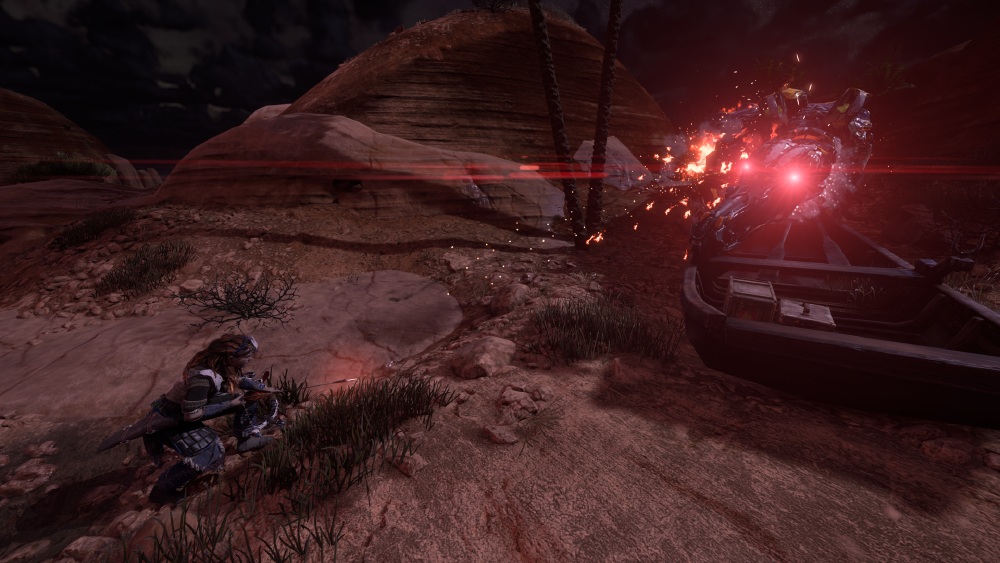
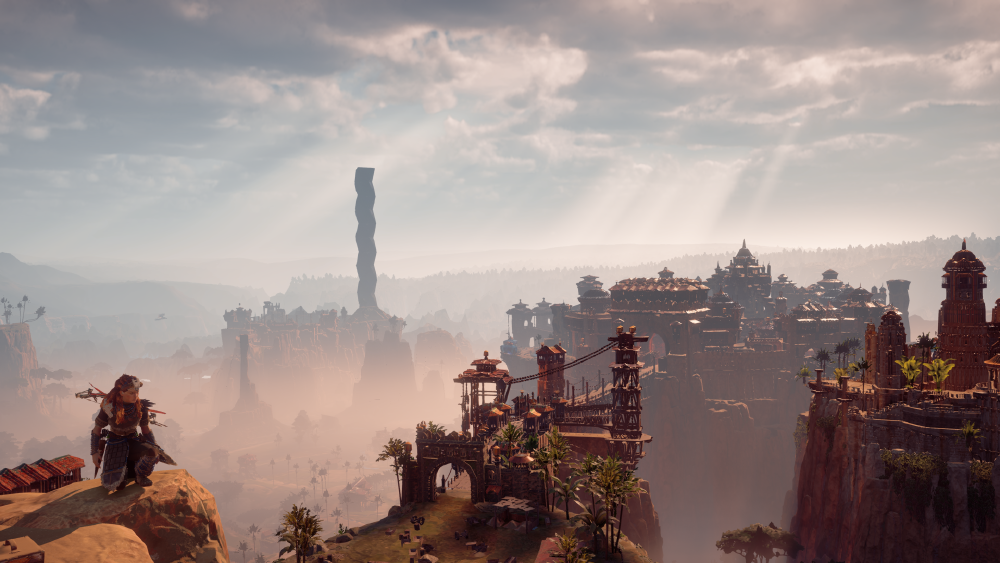
The river Fighting a Snapmaw at night The city of Meridan

Weekend long reads

  • Surrogate Angels of Death. The minute you feel you have gotten to rock bottom, Trump shows up with an excavator, thumbs up and grin on his face. Imagine being made to pose with the very person who inspired your parents' murderer to drive across the state and execute them because they live in a town with brown people. But — remember that this baby couldn’t not have been in Melania’s hand without his family’s agreement. Trumpism is a cult.
  • Three Years of Misery inside Google. Nitasha Tiku takes us on a deep dive in into what happened at Google over the last three years: Damore’s manifesto, of course, but also the projects with China and the US government, as well as several examples of personal misconduct and harassment of women and trans folks. As an ex-Googler (I left in 2012), Tiku does a great job of capturing certain aspects of the company’s culture. Google thrives (thrived?) on an incredibly strong internal exchange of idea, all of which is predicated on confidentiality. The repeated leaks exposed employees to harassment from the alt-right — the internal trust didn’t just erode, it shattered. In the midst of this, the leadership was caught red-handed and helpless at the same time.
  • In God’s country. How backwards are the evangelicals ready to bend over to overturn Roe v. Wade? Trump is an all-out-for-money businessman, had three marriages, is credibly accused of rape by several women, separates families and calls people animals. This piece is not as inquisitive as I’d hoped — Bruenig is herself an outspoken Christian – but it does show that Trump can be divisive as far as the heart of the Bible belt. Though, as long as those people don’t actually get their high horses to steer away and vote him out, their doubts are no earthly use.

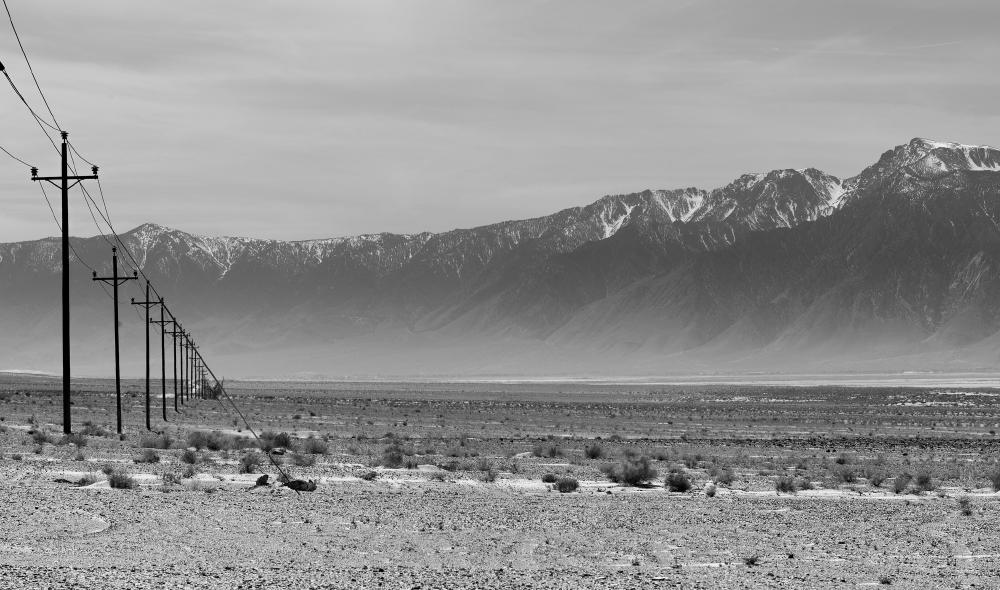
Death Valley

In March of 2016, Molly and I spent a long week-end in the Death Valley. I had never quite been to the desert before then and Death Valley was a striking place to start. I’m not one to care much about highest-temperature this or lowest-elevation that — we weren’t even there when it was very warm. But the sheer immensity and, well, desert-ness, of the place is humbling.

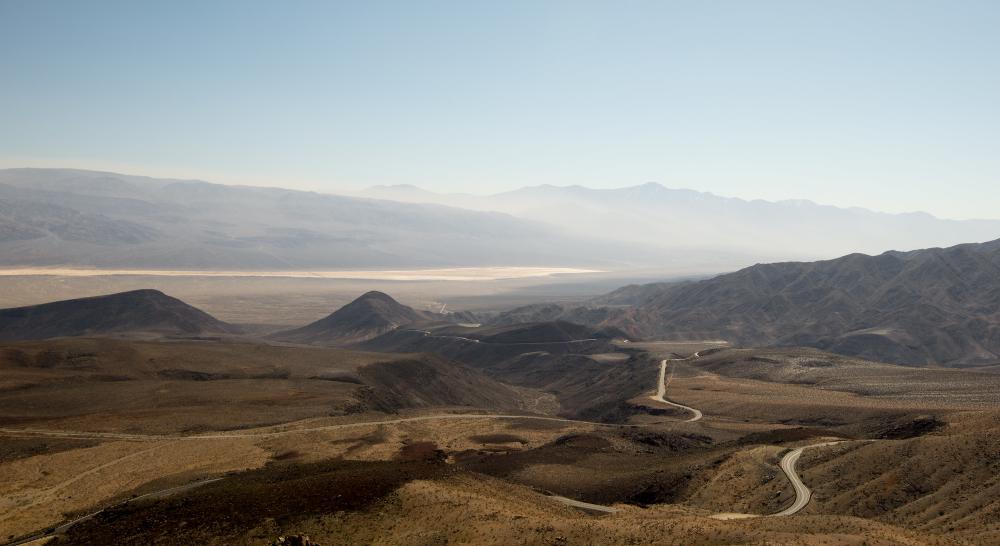
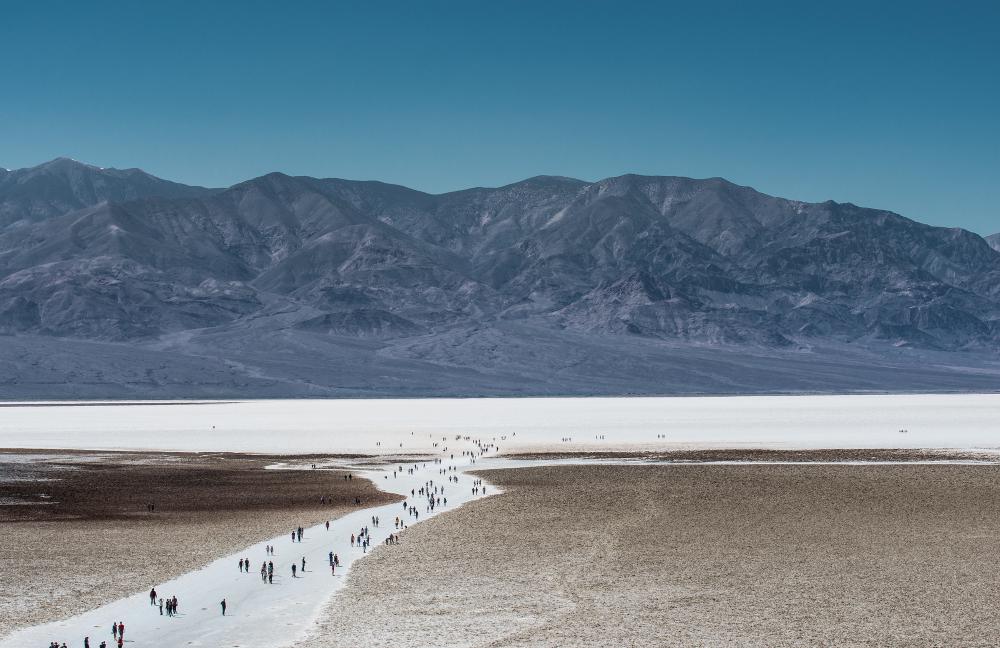
We went there with hopes of catching the superbloom, which was expected from the heavy rainfalls after end of the last California drought. While we did observe many breeds of wildflowers, they tend to be small and nowhere dense enough to change the hue of the hills. Here’s a few chosen pictures from the trip:

Entering the Valley Badwater Basin Dune From the Road

And the full album.

Long reads diet for the week

  • Please Allow Jonathan Weisman of the New York Times to Teach You About White Supremacy. A striking rebuttal to the assertion that middle America must be white, and that if it isn’t, then it isn’t America. Weisman, an editor for the presumably liberal New-York Times, deserves all the flak he’s getting for trying to dismiss the midwestern roots of Rashida Tlaib and Ilhan Omar. Whichever side of the political spectrum you identify with, white supremacy is precisely about dismissing the existence and role of non-whites in society.
  • “This Shithole Made Me”. One of the best decisions I’ve made in recent times was to disable all my work Slack notifications on mobile devices. 4 writers with a heavy presence on Twitter discuss how tight social media loops and the stream of notifications changed their habits and their brains. They also go into how they are trying to fix themselves by, e.g. reading paper books. Marie Kondo ought to do a show for folks whose life is getting lost in the mountain of digital crap they crave each day.
  • “The Art of Giving a Damn”. Last week, Beto O’Rourke said the words “shit” and “fuck” and it was recorded on camera. This has somehow grown into a story competing with the act of white supremacist domestic terrorism he was reacting to. America has always had a weird relationship with swear words: G-rated movies can show dozens of people being shot and killed but don’t you dare use any word that might hurt the audience’s sensitive ears. This is the same bend-over backwards logic that leads Walmart to (temporarily) remove video games from its shelves while it keeps selling guns. Megan Garber takes a historical lens at the use of profanity in politics and its role in conveying outrage.

The new normal

It will soon be 18 years since the 9/11 attacks.

The folks who were born in 2001, the first group of people who have never known any better in their entire lives than what has unfolded since then, that group will be of voting age this year.

There are likely metrics that can objectively show we live in safer times today than 20 years ago, but the world’s violence seems perceivable well beyond what my generation had to absorb in the 80s and 90s.

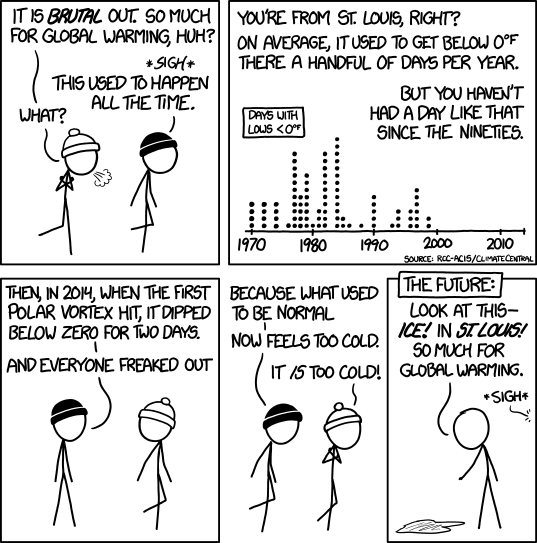
XKCD Cold

Just like the climate becoming warmer, there’s a baseline trend of a world that is getting safer and more peaceful, not just over the last century years but also since just 2 decades ago. And just like we tend to notice a hail day in June (a-hem), our timelines sporadically wake up to report on the latest violent act in the world: global terrorist attacks, unfathomable acts of gun violence, refugees drowning by the thousands, wars that have no end in sight.

Sometimes, one of these sticks around and forgets to go away. My last post in this space dates back from almost four years ago, right after the attack that hit the Bataclan. I’m not sure why I anchored onto this one event more than I did others. My thoughts about it kept looping back and feeding on themselves. They grew stronger when the testimonies of the survivors started making it out. They grew stronger when I pictured what happened in that space. They grew stronger when I wondered why it all happened.

Barely a year later came the 2016 election, which brought a different kind of mental blow. Seeing fascism rise so hard and so fast, both in the country I call home and abroad. The daily grind of dealing with the non-stop bullshit and verbal diarrhea falling from the highest level of leadership.

And I think about the kids who were born in 2001 –my nephew being one of them– and how these are the examples that are set for them, this is the life they know and how disappointing that must be. I’d almost like to lie to them that the world used to be better. But I keep myself honest in the most basic and dull kind of way: it was just different. It was violent and racist and sexist in different ways — in a more diffuse and tolerated fashion.

To me, the last 18 years feel like a weird string of events that portray a world going from bad to worse to even worse. And at the tail end of that, the change caught up to me and I stopped updating my website for a while and not a lot of value was lost. I don’t think this cycle of bad thoughts has quite ended yet, but it has become tamer over time. And a lot of things have happened since 4 years ago. Time to catch up on that.

Philippe Lançon on the Paris attacks

Philippe Lançon is a french journalist who works at Charlie Hebdo – he was gravely injured in the attack that took place in January and has been recovering since then. Yesterday, he published a lengthy piece where he reacts to the most recent attacks that took place in Paris on November 13th.

Go read it in French if you can, but I took a stab at translating what I found to be the most relevant section. Pushing further on the idea that the terrorists were targeting a certain idea of the French lifestyle, Lançon also claims that this very lifestyle has been long criticized, and opposed from even within France itself.

We form a chain, held together by grief and pain but also by the lifestyle these murderers seek to destroy. This lifestyle, or so we hear, is that of the “bobos” [French portmanteau for “bourgeois boheme”] and of their children. Why have these civilized city dwellers, the younger ones, the open ones, the cultured ones, and, at the end of it, the ones inspiring sympathy all the way down to their own caricature, have they triggered so much hate and sarcasm within the French society – including, and possibly first and foremost, from their own ranks? Because they are not fitting the role this society would like for them to have. Left and right, they are chastised for having a conscience, good or bad, which the old political discourse fails to comprehend. They do not behave like the bourgeois of the wealthy neighborhoods – where the killers might hesitate to pick their targets from: we sneer of these traitors from their status, politically-correct hypocrites, hipsters with moods. They live in diverse areas, are curious of the world and its people, their children travel and speak foreign tongues, they are neither racists, nor nationalists, not communalists: they are accused of being cosmopolitan profiteers, “without grounds.” They are open enough in their habits and vulnerable enough in their success to give any brute the desire to maim them. What are they, though, if not the living and well-articulated elements of our moribund “social link?” This is what some denounce and others pointed their assault rifles to. After all, most of the killers are, first and foremost, born and raised French.

Original text:

Nous formons une chaîne, soudée par le deuil et la souffrance, certes, mais aussi par le mode de vie et de pensée qu’à travers nous ces tueurs veulent détruire. Ce mode de vie, nous dit-on, est celui des «bobos» et de leurs enfants. Pourquoi ces bourgeois urbains et civilisés, plutôt jeunes, plutôt ouverts, plutôt cultivés, somme toute assez sympathiques jusque dans leurs caricatures, ont-ils provoqué tant de haines et de sarcasmes dans la société française –y compris et peut-être même d’abord parmi ceux qui en font partie  ? Parce qu’ils ne se tiennent pas à la place que cette société voudrait leur assigner. A droite comme à gauche, on leur reproche d’avoir une conscience, bonne ou mauvaise, que ne traduisent plus les vieux dictionnaires politiques. Ils ne se comportent pas comme les bourgeois des beaux quartiers – lieux où les tueurs ne songeraient sans doute pas à faire un carton  : on ricane de ces traîtres à leur statut, hypocrites bien-pensants, hipsters à états d’âme. Ils vivent dans des zones mélangées, ils sont curieux du monde et des gens, leurs enfants voyagent et parlent d’autres langues, ils ne sont ni racistes, ni nationalistes, ni communautaires  : on les accuse d’être des profiteurs cosmopolites, «hors-sol». Ils sont assez ouverts dans leurs habitudes et assez vulnérables dans leurs réussites pour donner envie à n’importe quelle brute de les défigurer. Que sont-ils pourtant, sinon des éléments vivants et réfléchis de ce moribond «lien social»  ? C’est cela que les uns dénoncent, que d’autres ont aspergé au fusil d’assaut. Après tout, la plupart des tueurs sont d’abord, eux aussi, des Français bien de chez nous.