A Year of CrossFit

Just about a year ago, I entered a CrossFit gym for the first time. Like everyone, I had heard about CrossFit as the ultimate workout and I had seen the images of ripped guys flipping tractor tires and doing pull-ups up as if they are in zero-G. I had been curious about it for a while and I had looked up a couple of gyms in the city. It’s a serendipitous find of CrossFit PH on my way to work that achieved to convince me I should give it a try.

At the beginning of 2014, Strava’s marketing team asked employees to list their fitness goals for the year. I remember writing: “12 Gran Fondos, 1 pull-up”. Biking is easy for me but I have never been able to literally pull my own weight up, regardless of how much I lost. For the past two years, I averaged 5,000 miles on my bike and I’ve tried to run about 1 hour every week. It’s a pretty high volume but these activities focus on specific muscle groups and motions. I was looking to bring back a balance in order to consolidate my fitness.

On my first intro class to CrossFit, Alexis made us do an 8-minute WOD which consisted of three moves: pull-ups, squats and push-ups. At the end of it, I was lying on the floor, panting and feeling exhausted. Alex helped me up and said “for just 8 minutes, you were fighting against nothing but the weight of your own body”. This struck a chord with me. I can ride for a hundred miles or run a half-marathon in about 2 hours – how can those simple movements make me so tired, so quickly?

I made a habit of going to the gym twice a week. I haven’t always been able to keep up with the schedule but that was the goal. from the beginning, I really liked that every workout happened in a group. Unlike a regular gym where you’re left on your own deciding what to do, CrossFit workouts happen in groups and there’s a program to follow for an hour – starting with a session focusing on strength or skills then moving on to the WOD. Most WODs are timed and everyone does them at once. Sometimes you get paired with someone else – to spot them on the bench or alternating activities during a WOD (“I’ll trade you 500m on the rower for 1 minute in an L-Sit”). It creates an atmosphere of companionship.

I more or less managed to stick to my plan throughout the year. Did I become ripped? Absolutely not. Some of my muscles are very slightly more toned than last year and I have flipped a tractor tire a bunch of times, but that is as far as I will fit into the CrossFit stereotype. A year later, my CrossFit performance is still very mediocre. Every day, attendees of the gym write down their results of today’s WOD on the whiteboard, publicly visible to everyone else. On a regular basis, I’m in the 20th percentile of men and that’s by modding the WOD down – using lighter weights than prescribed or using helpers such as bands to do pull-ups.

On the other hand, a look at the rest of my 2014 athletic performance shows very clear signs of improvements, year-over-year:

  • In June, I rode from San Francisco to Los Angeles with the AIDS/LifeCycle. It felt easier and was faster than the two other times I had done it before. The ALC stands diametrically opposed to a race but there’s an inevitable pride in finishing in the first 10 of 2,500 riders on a long day.
  • In February, I ran the Kaiser Half Marathon in just over 1:53 — a 5 minute improvement over my 2013 performance. In September, I ran the Giants Race in under my stretch goal of 1:45. That’s an 11% improvement in 18 months.
  • A few days later, I ran the San Francisco JPMCCC in 24:10 – again, 11% faster than my 2013 time.
  • Late in August, I beat my previous personal record for longest ridden distance by about 30 miles. It was exhausting, but I don’t think I could have done this just a year before.

Did CrossFit help? It’s hard to say. I was a Training Ride Leader for 9 months before the ALC and the sheer volume of distance and time must have helped building a good baseline. On the month leading to the Giants Race, I increased my running volume to a sustained rate that was higher than ever before: I ran 25km each week for 4 weeks. It’s hard to tell apart the result of focused training and that of the CrossFit baseline.

On Thanksgiving Day, we did an outdoor WOD called the monster mile: 10 intervals going up the 1/10th of a mile on Wisconsin St. between 19th and 20th St — a 13% incline that you have to climb and go back down in under 3 minutes each time. That was not easy but I was surprised how much everyone in the group was struggling. Struggling a lot more than me.

And that’s something I learned this year: the huge gap that exists between strength and condition. I’m not fit to bench 200 lb like most of the folks at the gym. Heck, I’m still struggling to do just 5 push-ups. But the point is: pumping iron is far from being all I do. And while I think CrossFit helped me train new muscle groups and develop strength where I didn’t have much (if any) before last year, the point is that I really reaped the benefits of my work by keeping up with cycling and running.

Last week, I arrived to the gym 10 minutes before the class started. I stretched and warmed up for a bit and still had a couple of minutes to spare. So I went to stand under a bar and looked up. I hadn’t tried for months but I felt like the year is closing in fast and I should start being serious about the second of my 2014 goals. Jump, grab the bar, inhale and pull… And just like that, my chin is over the bar! Sign me up for another year.

Uber isn't responsible for your safety and you don't want them to be

I don’t like Uber very much. Well, not anymore. The first time I heard of them was right at the inception of the service in San Francisco. I didn’t even live in the city at the time but I had heard good feedback from gay, queers and transgender people that Uber was, if not a solution, at least a positive change for them. Because it was (and still is) a luxury service that was made available at the tip of everyone’s fingers – “everyone’s private driver”. To groups that are frequently victims of discrimination and violence, Uber was a guaranteed way to be picked up anywhere at any time, hence limiting the time you would normally spend trying to hail a cab in an unknown neighborhood.

My esteem for Uber has gone downhill from there: misogynistic ads, open threats to journalists and shady business practices in cities like Portland are just few of the many ways in which Uber is routinely operating these days. That’s not even to mention creepy or outright violent drivers. It’s really hard (or not) to believe a company valued at $40B could operate in such a fashion. Uber has become the symbol of how businesses that call themselves ‘disruptive’ end up being more abject than the ones they are supposed to replace.

This morning, I woke up to the news that Sydney was in practical lockdown due to a hostage situation in the CBD. The news was heavily discussed and spread on Twitter. And on more than one occasion, people in my timeline were retweeting a screenshot of the Uber app showing a surge pricing in effect at 4x.

This is more than just about supply and demand. Sure, there probably wasn’t a lot of drivers willing to be driving around Sydney CBD – which is likely why the surge kicked in.

On the other hand, if your contingency plan during a hostage crisis is to expect Uber to pick you up and drive you to safety, I just don’t know what to say. In now way should Uber be responsible for the safety of anyone because they’ve shown pretty badly how much they suck at it. It’s irresponsible to hold them to such a standard when they not only have no duty to act in such a capacity, but also when they have demonstrably failed to ensure the basic safety of users.

If you feel unsafe and want to be evacuated, call the police. Granted, they were probably busy with other things in Sydney this morning but, you know, life’s tough. If you have time to complain about surge pricing on social media, your life was not in immediate danger – and it’s a shame to put your discomfort of having to walk on an equal standing to the suffering of the people who were directly involved in this morning’s events.

What should Uber have done? Prevent the surge, block multiplier at 1x to deter drivers from driving and make room for actual emergency services where they were most needed. Yes, they should be ready to respond to such situations very fast and it looks like they didn’t. Ultimately, the damage is purely on Uber’s side and it’s primarily a PR issue. So, unless your job is head of the comms team at Uber, there’s absolutely no reason to be angry about what just happened – and the same could be said about most times people are outraged regarding surge pricing.

The Imitation Game

I went to see Birdman last week (a great movie, by the way) and I was reminded by the trailers of the imminent release of The Imitation Game. The movie tells the true story of Alan Turing, a British genius who broke Enigma, the encryption device used by the Nazis during WWII. It is widely accepted that Turing’s work gave a decisive edge to the Allies, to the point that the war could have lasted much longer if it wasn’t for him. Turing went on to found and pioneer several fields that led to the development of modern computing.

I’m a computer scientist, I like going to the movies – it should be a no brainer for me to buy a ticket and run to see it now. But I can’t. As has been reported for months and as the trailer demonstrates: Turing’s homosexuality is downplayed to the point that someone seeing the trailer with a naive eye might think he was a plain straight guy. Turing was chemically castrated by his own country and killed himself over it.

This is 2014. The fight for marriage equality in the US isn’t over, but it’s made incredible strides in the past decade. Yet Hollywood appears ignorant and unable to recognize the simple sexual identity of a real-life hero they are seeking to make money from. And even though Turing’s homosexuality might be evoked in the movie, the trailer leaves no doubt as to the side of his sentimental life they prefered to insist on: his relationship with Joan Clarke.

Regardless of the production qualities of this movie, I can’t bear myself to spend $13 on something that is such an obvious fraud. If you can’t look at History without tried to bend it to a heteronormative vision, maybe you shouldn’t be in the business of making biopics.

On Javascript

A few days ago, James Higgs gave a talk at the Front-end conference in London – I’ll get back to the actual topic of that talk in a further post but I wanted to spend some time on one of the opening statements:

I really like Javascript, actually. Not trolling. […]. The reason I really like it is that it is by far the easiest way to get code running on somebody’s machine today.

This is simply impossible to disagree with. Javascript is the most accessible and widely-distributed VM for both developers and users today. There is no overhead in installing an app, you just load a website and it might be a Jekyll blog or it might be a full-featured 3D game. I don’t believe he was the one who coined the term, but Eric Schmidt was heard several times stating that Javascript is the assembly of the Web.

It’s been around for 20 years now – both application developers and browsers vendors have a lot invested in it. In other words, you can always hope that something better is going to show up, but it’s going to be a while before something else becomes as widely adopted.

It is quirky and imperfect, lacks ‘elegance’ as well as some concepts that are core to more respectable programming languages. But most importantly: it’s there and it’s waiting for developers to use it well – which is something that has become amazingly easier with the tooling and libraries we have handy. While it’s truly regrettable that vendors have introduced incompatibilities and proprietary extensions to the web platform, active work is being done on resolving those and moving forward at once.

JQuery has done an astounding job ironing out the kinks across browsers – it sucks that you have to include a 3rd party library just to get to work but it can’t be a deal-breaker. The same kind of fragmentation and inconsistencies routinely happens on the native side, and we just deal with it.

As someone who worked in Java for several years, CoffeeScript has provided me with a warm and fuzzy environment to work in. I know the generated code is subpar but it’s good enough and from where I stand, the tradeoff is well worth it: CoffeeScript doesn’t limit my ability to write proper Javascript but it helps me get to my goal quicker. The Chrome Web Inspector is an outstanding tool for whoever dabbles in web development.

And it’s not going anywhere – there’s simply no alternative at this point. And I realize data is not the plural of anecdote, but Google has given us enough anecdotes to write a book:

  • Blink is steadily adding features to the platform, with the stated goal of bringing the web on par with native platforms. ES6 is on the horizon.
  • Polymer is the closest thing there is to programming an Android app for the web.
  • In September, the Chrome team has shipped an Android VM running in the browser.
  • Material design is an attempt at unifying the user experience across Google devices and applications. Inbox is a good example of that. And why would a developer targeting the web need to have a battery icon?

It’s not far fetched to assert that Google is working hard to blend in the two platforms over which they have the most control: Android and the web. Sundar Pichai is, after all, heading both groups. With this in mind, it’s possible that we’ll soon have a situation where Android apps run seamlessly inside of Chrome, but where Javascript is a first-class binding on Android. I’m looking forward to Google I/O next year.

So, the reason I like Javascript isn’t because it’s a great language. It still trips me on more occasions than I like to admit. But I love its potential – the web platform is gaining in strength with every release of Chrome and Firefox. That’s like introducing new APIs in an operating system every six weeks. And all the user has to do is reload the page.

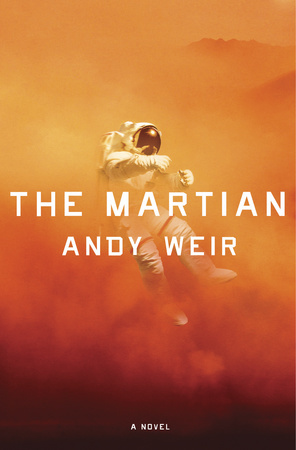
The Martian

I have just finished reading The Martian, by Andy Weir. I’m not big on reading fiction and I’m even less of fan of science fiction novels. It’s actually a true question whether the book qualifies as sci-fi but in any case: I’ve paged through the book like it rarely happens for me.

The Martian

The Martian tells the story of Mark Watney, an astronaut on the third manned mission to Mars who is left stranded and alone after his crew leaves him behind on the sixth day of their month-long mission. To everyone, Watney is dead, impaled by a debris carried by a storm whose strength was beyond the mission’s parameters.

Watney is a resourceful character, both a mechanical engineer and a botanist. These skills turn out to be pretty much the optimal combo if you’re in his situation. The reason The Martian is barely a sci-fi book is because it packs a lot of science. On many occasions throughout the book, Weir dwelves into the chemical structure of the jet fuel, details the protocol Watney follows and the precise calculations he must make to plan for his survival. It makes for a heavy literary style at times.

What I also see as a bit lacking is an idea of Watney’s emotional state of mind. Sure, he might have a really upbeat personality but it’s hard to believe there wouldn’t be times where the harsh reality of his fate would take over. And almost none of that appears in the text – it would probably have been possible to include that without making it the crux of the story. But the faults of the book pale in face of the thrill I had reading and picturing what life is like in complete isolation, fighting against a hostile environment.

Final good news: the book is soon to be adapted into a movie, to be released next year.

Road trip pictures

I have finally found the time to sort through and work on the pictures I have taken during my road trip to New Orleans. I’ve made the choice to process most of the pictures in black in white, which is something I have played with in the past but which I have found more challenging this time around. I was on the fence about losing the colorful character of buildings in New Orleans but I think the result is worth it.

Wall window at Meteor Crater The endless road in New Mexico Colorful houses in New Orleans Jazz singer at the Bamboula's Refinery outside New Orleans

The rest of the set is here.

The Problem with Music

In 1993, sound engineer extraordinaire Steve Albini wrote an extended essay titled the ‘The Problem With Music’. In it, Albini mercilessly describes the shortcomings and faults of the music industry, from business practices of major labels to the monetary breakdown of a record deal, all the way down to the technical mastery of sound engineers.

By now all rock bands are wise enough to be suspicious of music industry scum. There is a pervasive caricature in popular culture of a portly, middle aged ex-hipster talking a mile-a-minute, using outdated jargon and calling everybody “baby.” After meeting “their” A&R guy, the band will say to themselves and everyone else, “He’s not like a record company guy at all! He’s like one of us.” And they will be right. That’s one of the reasons he was hired.

Albini’s ethics can harldy be questionned. Of note, he’s always squarely refused to be paid on a percentage basis, preferring to set a fixed price on his work. With thousands of albums under his belt, and having worked on the music of both stadium-fillers and of obsure indie rock bands aspiring to fame, the depth and breadth of his work is unparalleled in today’s music industry.

Between a widely spread piracy and the rise of streaming services, the landscape of music has changed dramatically in a very short period of time. Back then, Pearl Jam was in a legal fight against the monopoly of live music behemoth Ticketmaster, and they lost. How many hundreds of millions of dollars have been collected in convenience fees since then?

In a recent speech, Albini gave the closest thing to an update to his 20 year old piece. It’s not all pink but Albini seems to embrace the new model in which the relationship between bands and audience is both more direct and richer.

I disagree that the old way is better. And I do not believe this sentence to be true: “We need to figure out how to make this digital distribution work for everyone.” I disagree with it because within its mundane language are tacit assumptions: the framework of an exploitative system that I have been at odds with my whole creative life. Inside that trite sentence, “We need to figure out how to make this work for everyone,” hides the skeleton of a monster. […] So there’s no reason to insist that other obsolete bureaux and offices of the lapsed era be brought along into the new one. The music industry has shrunk. In shrinking it has rung out the middle, leaving the bands and the audiences to work out their relationship from the ends. I see this as both healthy and exciting. If we’ve learned anything over the past 30 years it’s that left to its own devices bands and their audiences can get along fine: the bands can figure out how to get their music out in front of an audience and the audience will figure out how to reward them.

It’s humbling enough that Albini is a talented and hard-working person to begin with. But it’s mind-blowing to me that he also finds the time and intellectual energy to think deep and hard about the larger picture and the changing problematics of his industry.